Tag: trees

  • A Visual For Yesterday’s Post…

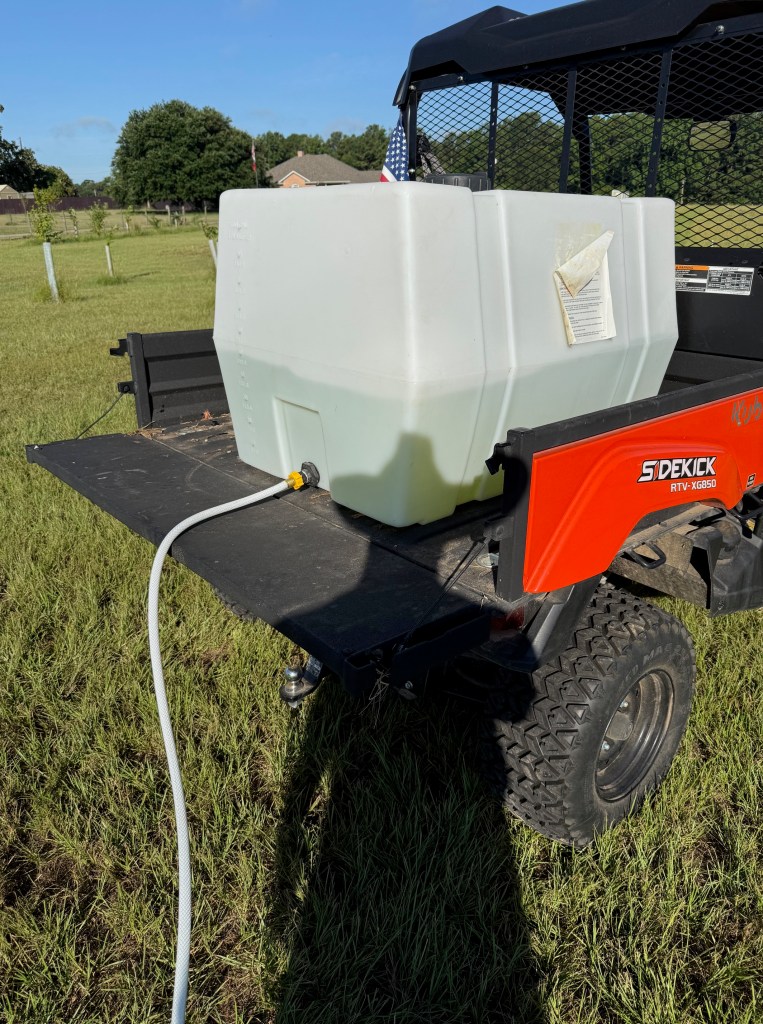
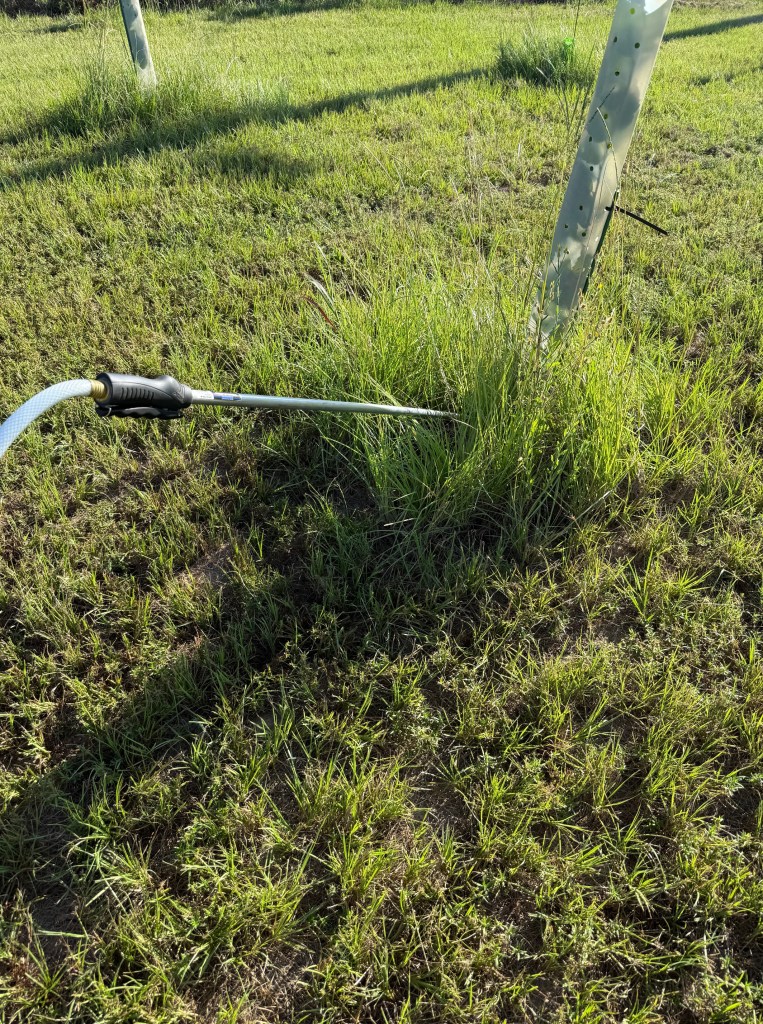
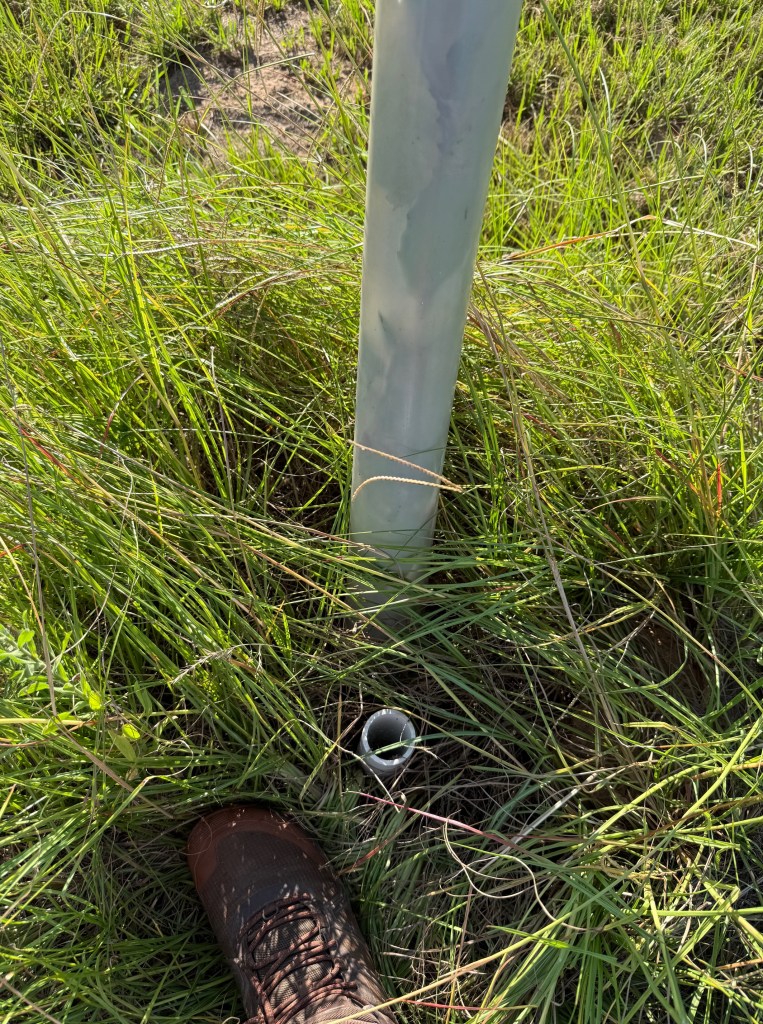
    I was running irrigation lines and black weed barrier and all sorts of “fixes” to handle the drought times that hit here, and nothing worked well. Water lines – the black plastic piping that you pop your drizzler into – tend to attract voles, mice, rats, squirrels, etc. – to chew them when they too are thirsty. The black weed barrier simply overheated the soil and killed roots. All these tricks that work in other environments do NOT work here. So, because I want to grow orchards here – where trees grow just fine once started – I came up with this idea. You can see my 100 gal tank, I haul it around on the side-by-side, I have a “wand” with a 45 degree curve at the very end that easily slips into the 2″ pipe and sits there while I water for 1 minute a tree, each week. It works.

    These pictures are in my Chinese Chestnut orchard. They seem to enjoy the heat and humidity, and get them going for two years, and they seem to tap into the groundwater and do just fine.

    Chinese Chestnuts, you ask? Think of a good silvopasture tree and chestnuts, mulberry, honey locust all come to mind, and in this particular field, I have planted all 3, with a major emphasis on chestnut. Valuable wood potential, as well as a nut crop. Plus, the shade is the start of planting understory crops and having them succeed here. I have a smaller plot with American/Asian/Hybrid Persimmon, Allegheny Chinquapin, PawPaw, Melon Berry, Blackberry, American Plum – and the shade from the faster growers aids those that need some help from our sun.

    I bought a piece of property that had been used mainly to run cattle, and it was simply acres of bahia grass – this is my way of trying to add some diversity.

  • Summer Heat & Saving Trees

    All I can say, is that Texas knows how to heat up in the summer! And with that heat comes a lot of additional work around here. I learned through much trial and error, that although East Texas may look like Louisiana, Mississippi, Alabama, Georgia, and on…it is truly a unique and challenging environment if you farm. Rain can be sketchy, heat can be withering, and dry winds are pretty normal. This part, where I am situated, used to be cotton way back in the day, but that crop has pretty much moved to the panhandle. When I drive around, I see mostly bahia hay fields and pine plantations. Both now make sense! But, neither of those interest me. One is an imported – and in my opinion – invasive grass that has pushed out native species, the other is part of a “somewhat” normal monoculture for this area…they don’t call it the pineywoods for nothing…but, not my interest. If you try other “native” trees, such as black walnut, persimmon, pawpaw, chinquapin, you have to help them for a few years. Irrigation mainly, but also with tree tubes to protect them from the deer and the winds. Water, which is here in good abundance even in a drought, is to be found below the clay and iron stone, and I feel the water level is high enough for trees to weather it out, if they get down to it. That is the key – their roots.

    It has taken me many trees, much expense in irrigation solutions, and a lot of sweat to figure most of this out. I lost acres of trees before I did! My go to now, and it has given me the best success, is dig the hole for the tree deep enough to slide in a 2′ length of 2″ PVC pipe that I have drilled a few holes in. Plant the tree with the PVC pipe, tree tube for the tree with a rebar-type metal stake. Every week when we have no rain, I drive around in my ATV with a 100 gallon water tank on the back, usually with a mild fertilizer in it, and I give each tree one minute of watering down that tube. It works.